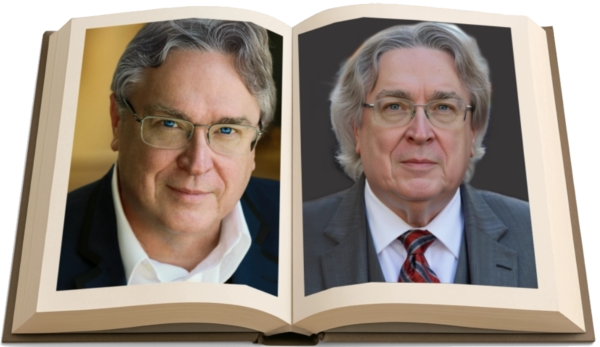
He's Been Called A Lot Of Things.
Most Of Them Were Accurate.
Folksinger, journalist, casino innovator, author, and apparently a
few things the Government had opinions about.
Gary Green has spent his life moving between rooms most people only visit once:
the folk stage, the newsroom, the casino floor, the tech world, and the writer's desk, and he never
quite left any of them.
T H E S T O R Y
The Anomaly
Greenwich Village
Didn't See Coming
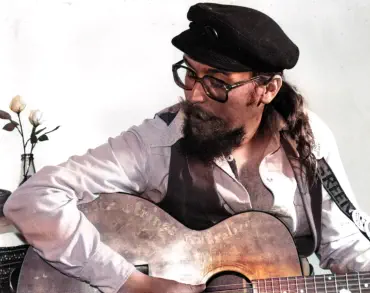
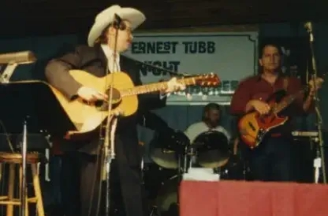
T H E F O L K S I N G E R
T H E J O U R N A L I S T
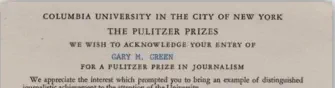
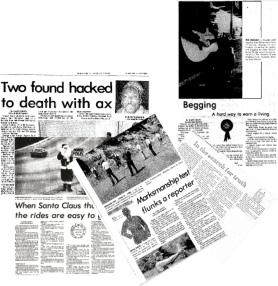
Two Pulitzer Nominations Before Age Thirty




T H E C A S I N O & T E C H G U Y
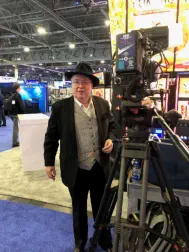
Five Percent of the Planet's E-Commerce
A standardized test once put his IQ in rare territory*, the kind of
number that gets attached to a person whether they want it or not. He
has always waved it off as a curiosity rather than a credential. But it's
hard to ignore the pattern that followed: a reporter and folksinger who
went on to build internet commerce infrastructure that, by 1999, was
processing roughly five percent of all e-commerce transactions on the
planet, primarily for Fortune 500 companies.
Then there were the casinos. He developed gaming properties across
the country, served as a senior executive for multiple casino
companies and slot machine manufacturers, helped rescue properties
that were failing, and built a proprietary, patented casino operational
management system still in use across the industry, even including
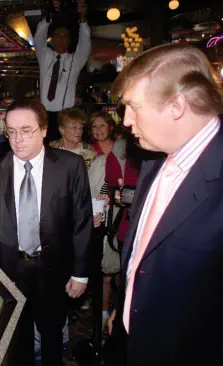
serving as a Vice President of Marketing and Player Development at
Trump Hotels and Casino Resorts.... Indian Gaming Business
magazine put him on its cover as a Class A operator.
He didn't come up through the Village the way most folksingers did. He
arrived from Appalachia by way of Nashville, an edge that belonged
equally to the Southern hills and the Village coffeehouse circuit. His
first three albums are now part of the Smithsonian Folkways collection,
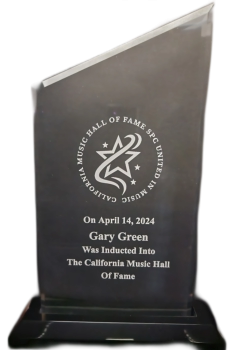
and in 2024 he was inducted into the California Music Hall of Fame
for that body of work.
Living in the offices of Broadside Magazine, he organized a topical
music project alongside Pete Seeger, Phil Ochs, and the Reverend Fred
Kirkpatrick; company that tells you what circles he ran in. A Freedom
of Information Act request later confirmed COINTELPRO, the FBI's
counterintelligence program, had been watching him too, the same
apparatus turned on Native activists at Wounded Knee. He has never
denied it particularly hard.
In Baltimore, he spent months mentoring a young teenage poet named
Tupac Shakur, son of a Black Panther Party member newly arrived in
the neighborhood. Gary gave him the same encouragement Johnny
Cash, Waylon Jennings, and Alan Ginsberg had given Gary. The shy
kid who walked through that coffeehouse door became, within a few
years, one of the most influential artists of his generation.
He moved between two lives that had little in common except him. A
few months on the folk circuit, then a few months back behind a
reporter's desk, and then back again, excelling and leaving is mark in
each. As a daily newspaper reporter and later as editor and publisher of
a magazine with a quarter-million circulation, he covered murders,
drug raids, and government corruption. He was nominated for the
Pulitzer Prize in journalism twice before he turned thirty
That led to a string of editing jobs, the work shifting from reporting the
news to deciding what made the paper. He ran a Washington trade
publication reaching 125,000 readers, then took his father's 600-
circulation community newsletter and rebuilt it from the ground up,
writing, editing, and designing every issue himself until it reached
250,000 circulation as a four-color magazine distributed statewide at
welcome centers, hotels, restaurants, and tourist attractions.
Along the way the stories never stayed contained to a single news cycle:
respectable men in elected office who turned out not to be, racism that
lived in institutions and not just individuals, and hate crimes that
made the local news for a day and then disappeared.

T H E A U T H O R
The Page-Turners Of A Born Storyteller
Some writers have one story in them. Gary has never had that
problem. Twenty-one books in so far, spanning historical fiction,
memoir, journalism turned roman à clef, and hard-won expertise
from four decades in casino operations, the throughline was never
subject matter. It was the pull of a story that wouldn't let go until it
was told all the way through.
A natural-born storyteller, he writes fiction and nonfiction with the
same intensity, because to him there was never a real difference, only
a story and whether he'd told it well enough yet.
Several titles are now in development for film and television. Ask
anyone who's read past the first chapter of anything he's written:
putting it down was never really an option.
T H E O R G A N I Z E R
Thirty Years Later
His Story Is Still
Considered Dangerous
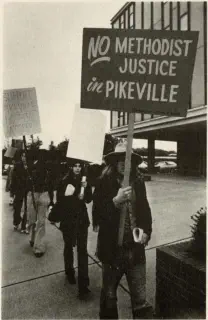
Gary's organizing work has its own quieter legend, the kind that
doesn't show up on a stage but still moves people. He started in high
school with anti-war organizing, then carried civil rights and
American Indian Movement work through college, all of it running
alongside the music and the journalism that were already taking
shape. Union organizing came later, first inside ITU newsrooms, and
from there he became a national director of organizing, leading what
became the largest single-bargaining-unit organizing drive in
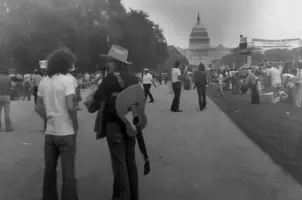
American labor history. He performed before an estimated 500,000
people at the AFL-CIO’s Solidarity Day march in Washington, and
still holds membership in the American Federation of Musicians.
Decades after his last organizing campaign, his name alone is still
enough to make a room nervous. A major manufacturer once
approached him to speak to its management staff on branding, then
quietly withdrew the invitation after its HR department discovered
his organizing history, concerned about what he might say to the
workforce. It was, in its own way, the highest compliment paid to a
labor organizer.

T H E S H O W M A N
He Even Once Owned An Actual Circus
Some careers don't fit on a business card. Gary's stage show, An
Evening with Gary Green, blends music, storytelling, and decades of
material no one else has lived to tell. Off stage, he's produced dozens of
concerts and comedy shows across the country, working with major
names in television, rock and roll, comedy, and pop music, including a
major Las Vegas Christmas season showroom production. He also
spent time as the on-camera host of Casino Insider, a television series
pilot that took him inside gaming properties most viewers would never
otherwise see.
Then there was the circus. A production built from a portion of the
legendary Moscow Circus, sold off after the Soviet Union's collapse,
was in financial trouble when Gary was brought in as a marketing
partner to help save it. The show was permanently parked at an east
coast beach resort, and ownership eventually passed to Gary alone,
making him, by any reasonable definition, an actual circus owner.
He's a longtime member of the Society of American Magicians as well
as ofther entertainment professional organizations. No doubt, if there's
a stage, a curtain, or an audience, Gary has probably found a way to be
the one running the show.
W H E R E T H I N G S S T A N D N O W
None of this is finished. Gary is still writing, still recording, still taking the stage, and
still saying yes when someone asks him to speak. The film and television
conversations around his catalog are, as of this writing, very much alive. If the
pattern of his life is any guide, the next chapter is already underway somewhere, even
if he hasn't told anyone about it yet.
H O N O R S & R E C O G N I T I O N
The awards speak for themselves. Gary was inducted into the California Music Hall
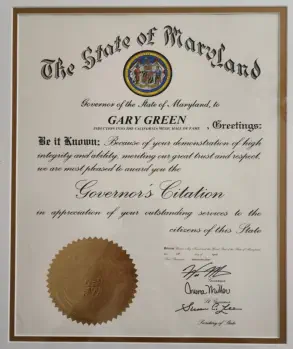
of Fame. The State of Maryland issued him a Governor's Citation, recognizing his
"high integrity and ability" and the "great trust and respect" his decades of work had
earned, in appreciation of his outstanding service to the citizens of the state. And a
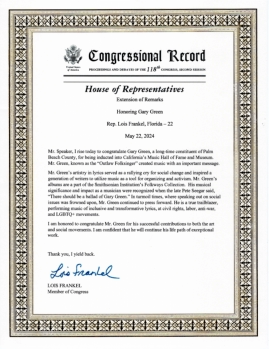
tribute to him was entered into the United States Congressional Record, naming him
a true trailblazer for the generations of artists he mentored and inspired.




© 2026 Gary Green. All Rights Reserved.
* In the 1960's he tested as one of the 22
nd
highest IQ's ever recorded (based on
the 1960 Terman and Merrill revision of the Stanford-Binet Intelligence Scale); a
badge that Gary scoffingly rejects as “pure hocum”,